
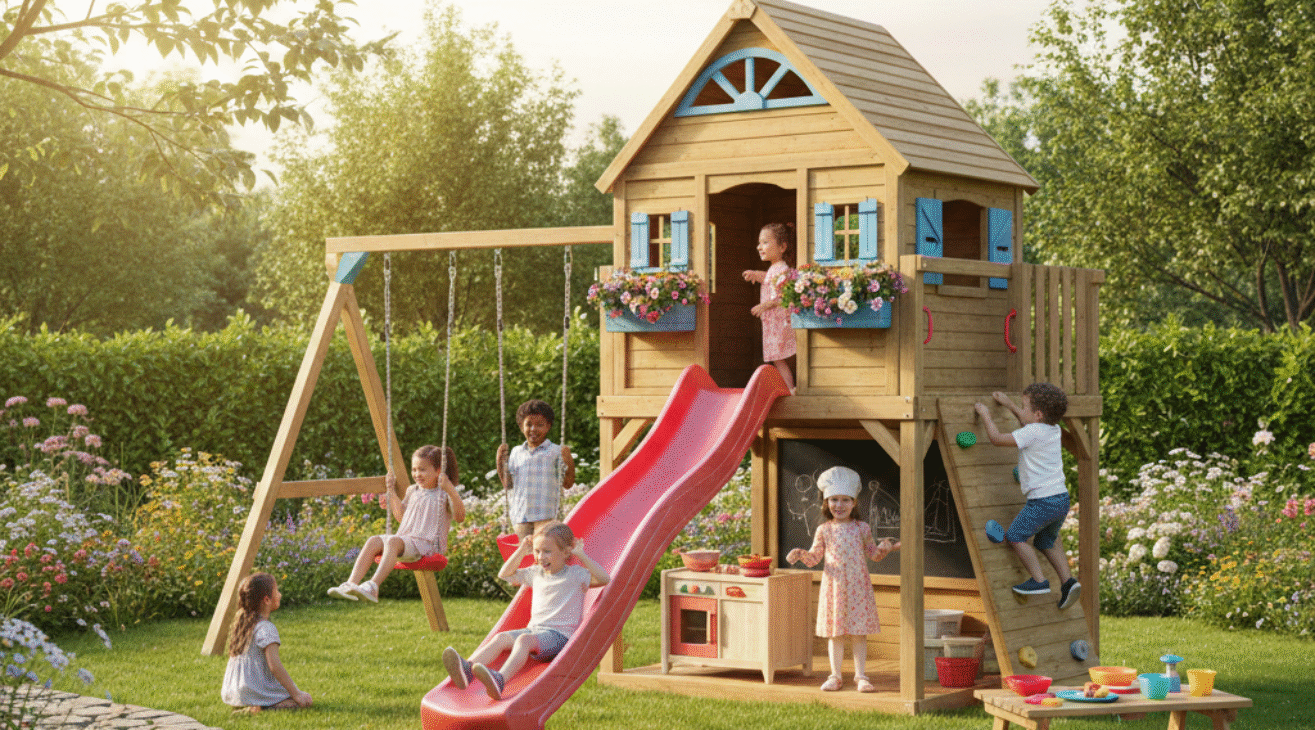
How to choose kids’ outdoor playhouse? Features, benefits & top picks
A guide for buying the outdoor playhouse
Choosing the right outdoor playhouse for your children is one of the most rewarding investments you can make in their development. An outdoor playhouse is far more than just a toy. The playhouse is a gateway to boundless imagination, essential physical development, and cherished childhood memories.
Key insights from this article
- A playhouse is very beneficial for your kids’ development and social skills, it also extends the time spent outside
- Choose a playhouse that resonates with your child
- Map your backyard possibilities and choose the right type of playhouse for your kids
- Look for safety on all components and sturdy construction
- Ensure playhouse materials are non-toxic and weather-resistant
- The most common mistake is ignoring your garden’s space and ground conditions
- Backyard Village is making your playhouse search stress-free
In a world increasingly dominated by screens, providing children with dedicated spaces for creative, active outdoor play is more crucial than ever.
This conclusive article with a simple structure will navigate you through every aspect of selecting the perfect outdoor playhouse, transforming your garden into a magical, safe place for your children.
Navigate easily through the article
- Choosing the right outdoor playhouse
- The most popular types of outdoor playhouses
- Materials to use
- Best maintenance practices for wooden playhouses
- Why do kids need a playhouse?
- Choosing the right playhouse for you
- Outdoor playhouse price ranges
- What features to look for in a playhouse?
- Common mistakes when buying an outdoor playhouse
- Real families experiences
- Where to I find an outdoor playhouse?
- How to prepare your garden for a playhouse
- FAQs
How do I choose the right outdoor playhouse for my child?
To choose the right outdoor playhouse, consider your child’s age (18 months-12 years), available garden space (minimum 6m x 6m for basic playhouses), budget (£100-£2,000+), material preference (wooden, plastic, or metal), and desired features (slides, swings, climbing elements). Safety certification and weather resistance are essential factors.
Selecting an outdoor playhouse is an exciting process that should be tailored to your child’s unique needs and your family’s lifestyle. The decision hinges on balancing developmental advantages with practical considerations. Understanding the core benefits first helps frame your search.
Children who spend at least two hours a day outside demonstrate 27 per cent more moderate-to-vigorous physical activity than their less active peers, highlighting the inherent value of outdoor play [UNICEF Europe and Central Asia, 2025].
As the global playground equipment market continues to grow, valued at USD 5.40 billion in 2025, it’s clear that dedicated play spaces are increasingly recognized for their importance [Intel Market Research, 2025].
What safety features should I look for in an outdoor playhouse?
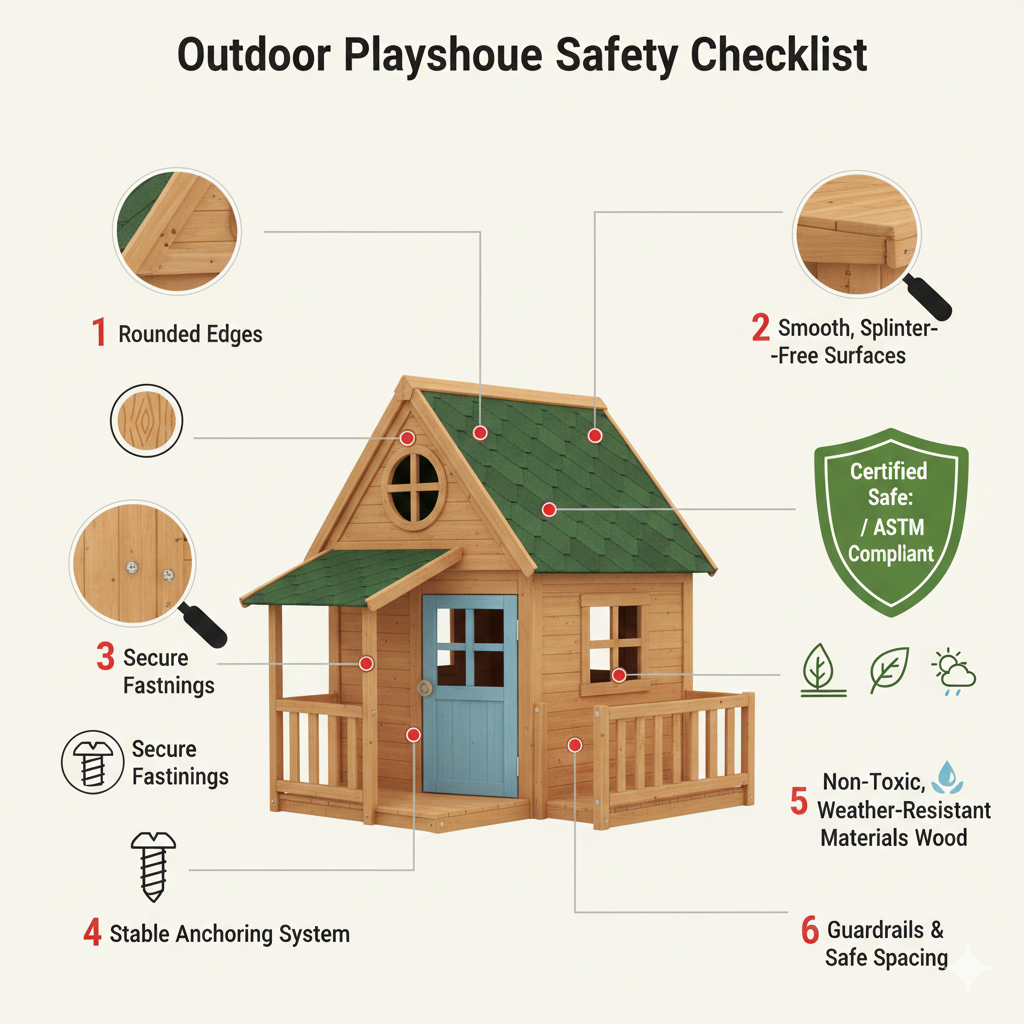
Safety is paramount when it comes to outdoor play structures. Given that over 195,000 children suffered injuries from summertime activities in 2023 [SafeHome.org, 2025], ensuring a playhouse is secure is non-negotiable. Look for smooth, splinter-free surfaces, rounded edges on all components, and sturdy construction that can withstand active play. Secure fastenings, stable anchoring systems, and appropriate spacing for integrated features such as slides or climbing elements are crucial. Ensure materials are non-toxic and weather-resistant. Reputable manufacturers will adhere to safety standards, providing peace of mind that the playhouse has undergone rigorous testing.
What are the most popular types of outdoor playhouses?
The variety of outdoor playhouses available caters to diverse preferences and needs. Wooden Playhouses, often referred to as Wendy houses, are a classic choice, offering natural aesthetics, durability, and excellent customisation potential. They blend seamlessly into most gardens and can often be painted or decorated to match your child’s preferences.
Plastic playhouses are typically lightweight, easier to clean, and often more budget-friendly, though they may offer less aesthetic appeal and can fade over time.
Play Towers (usually wooden playhouses) can be seen as a separate category, featuring elevated platforms, often incorporating slides and climbing elements, providing a sense of adventure and a bird’s-eye view of the garden. Some elaborate designs even feature multiple levels or interconnected sections for extended exploration.
| Feature | Wooden Playhouses | Plastic Playhouses | Play Towers |
|---|---|---|---|
| Average Price | £300-£2,000 | £100-£600 | £500-£3,000 |
| Lifespan | 10-15+ years | 5-10 years | 10-15+ years |
| Maintenance | High (annual sealing) | Low (basic cleaning) | High (multiple components) |
| Customisation | Excellent (paint, accessories) | Limited | Good (modular additions) |
| Weather Resistance | Good (when treated) | Moderate (fading/brittleness) | Good (treated wood) |
| Aesthetic Appeal | Natural, garden-blending | Bright, playful | Adventurous, striking |
| Best For Ages | 2-12 years | 18 months-6 years | 4-12 years |
| Assembly Difficulty | Moderate-High | Easy | High |
| Resale Value | Good | Low | Moderate |
| Sustainability | Excellent (if FSC-certified) | Poor (plastic waste) | Excellent (if FSC-certified) |
Should the playhouse be styled or in a specific theme?
The styling and theme of a playhouse can significantly enhance a child’s engagement and imaginative play. While a classic Wendy house design offers timeless charm, themed playhouses can spark creativity by transforming into a shop, a castle, a pirate ship, or a fairy cottage. Consider your child’s current interests and favourite stories.
A themed playhouse can encourage role-playing and storytelling, providing a specific backdrop for their adventures. Alternatively, a more neutral design allows for greater flexibility, enabling children to dictate the theme through their own imagination and play.
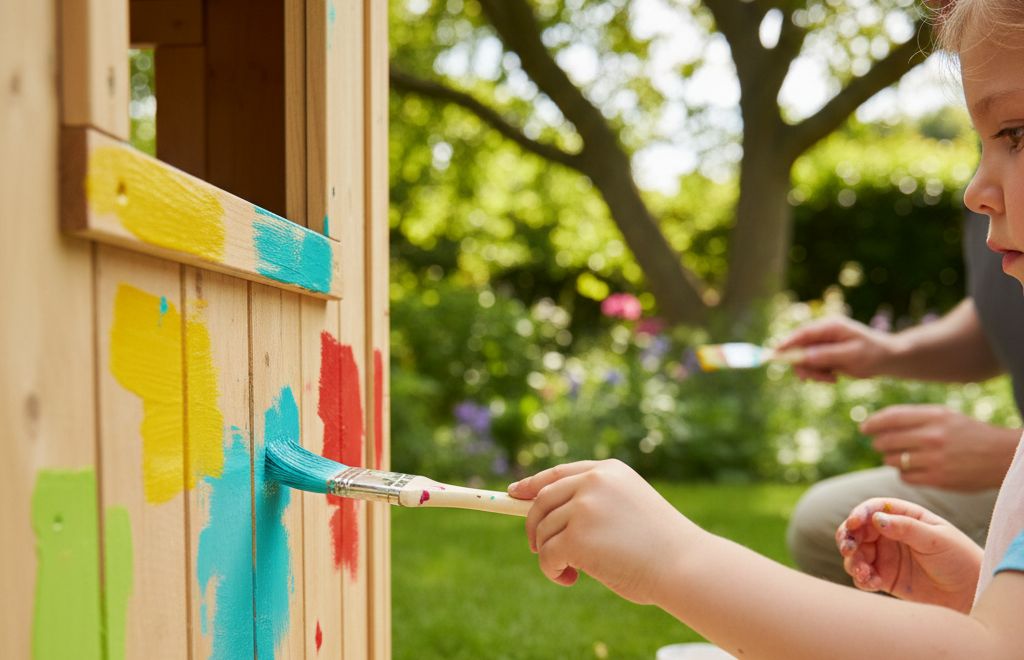
The key is to choose a style that resonates with your child and encourages creative expression.Maybe the best solution for your family is to design the playhouse as a fun DIY project.
What materials are commonly used to build outdoor playhouses?
The choice of material profoundly impacts a playhouse’s durability, safety, and maintenance requirements. High-quality construction is essential for longevity and ensuring a safe play environment.
How do weather conditions affect outdoor playhouses, and how can I protect my playhouse?
Outdoor playhouses are constantly exposed to the elements, which can affect their longevity.
- Wood, while natural and usually the most appealing choice, could be susceptible to moisture, UV rays, and temperature fluctuations, leading to warping, cracking, or rot if not properly treated and maintained.
- Plastic can become brittle in extreme cold or faded and degraded by prolonged sun exposure.
- Metal components can rust.
To protect your playhouse, regular cleaning, sealing, and inspecting for damage are crucial. Positioning the playhouse in a location that receives some shade can reduce sun damage. Using weather-resistant paints and sealants provides an essential barrier against moisture and UV rays.
What are the best maintenance practices for a wooden outdoor playhouse?
Maintaining a wooden playhouse is key to its lifespan. After initial assembly, treat the wood with a child-safe sealant or stain to protect it from the elements. Inspect the playhouse regularly for any signs of wear, such as loose screws, splinters, or damaged panels. Clean the playhouse periodically with mild soap and water, ensuring it dries thoroughly.
Reapply sealant or paint every one to two years, or as needed, especially after harsh weather seasons. Check moving parts like slides and swings for proper function and lubrication. Proper maintenance ensures the wooden playhouse remains safe and aesthetically pleasing for years of outdoor play.
Why do kids need a playhouse?
Playgrounds, including dedicated outdoor playhouses, are vital for a child’s holistic development. They provide a platform for essential learning, growth, and enjoyment that extends far beyond mere entertainment.
Fostering Imaginative Play and Role-Play Skills
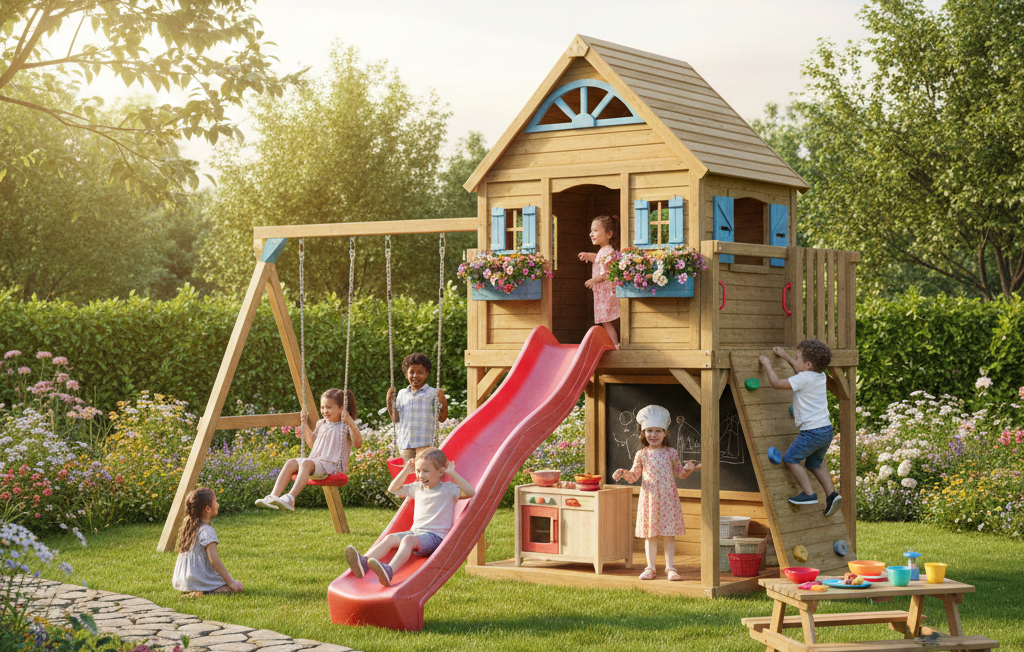
A playhouse serves as a blank canvas for a child’s imagination. Within its walls, they can transform into anything they wish – a chef, a shopkeeper, an astronaut, or royalty. This imaginative play is fundamental for cognitive development, helping children process their understanding of the world, explore different perspectives, and develop problem-solving skills. Role-playing within a playhouse environment allows children to practice social scenarios, express emotions, and build confidence in a safe, self-directed space.
Boosting Physical Development and Motor Skills (Crawling, Climbing)
The very act of engaging with a playhouse encourages physical activity. Children will naturally want to explore, climb onto platforms, slide down a slide, and navigate the structure. These activities help develop gross motor skills, coordination, balance, and spatial awareness. Even simple actions like crawling through a doorway or reaching for a toy on a shelf contribute to fine motor skill development. As mentioned before, children who spend at least two hours a day outside benefit from increased physical activity. Your own playhouse is a genius solution to make children become more active without noticing.
Enhancing Social Interaction and Social Skills
Playhouses are natural hubs for social interaction. It is so easy to invite friends over to play at your fun playhouse. When multiple children play together, they learn to share, negotiate, cooperate, and communicate. They develop empathy as they take on different roles and understand each other’s perspectives. A playhouse can become a solid base for lifelong friendship. Playing together with different kids is essential for thriving development, fostering teamwork and conflict resolution skills in a playful context.
Connecting with Nature and Promoting Emotional Well-being
Spending time outdoors in a playhouse connects children with nature, allowing them to experience the natural world directly. This connection is vital for emotional well-being, reducing stress and promoting a sense of calm. The freedom and autonomy provided by their own play space can boost a child’s self-esteem and independence. Outdoor play in general is crucial, with organisations recommending at least one hour of moderate to vigorous physical activity daily for children aged five to seventeen [UNESCO Courier, 2024], a goal easily met with engaging outdoor structures. Playing outside boosts the immune system and helps the kids to understand and love nature.
Choosing the right playhouse for you
Selecting the perfect playhouse requires a thoughtful approach, considering several key factors to ensure it meets your family’s needs and provides lasting enjoyment.
What kind of play does your kid perfer
Consider the primary play style you wish to encourage. Is it focused on high-energy activity, with a desire for slides and climbing structures? Or is it more geared towards quiet, imaginative play, where a charming Wendy house with a dedicated creativity corner would be ideal? Some playhouses are designed for active adventures, incorporating multiple levels, play towers, and accessories like steering wheels. Others prioritize a cosy, imaginative space, perhaps with small benches inside or a miniature kitchenette.
Child’s Age and Interests
The age and interests of your children are key factors. Younger toddlers might benefit from a simpler, safer playhouse with features like wide doors and enclosed spaces. As they grow, their interests will evolve, and they might gravitate towards more complex structures with slides, climbing walls, or themed designs that reflect their current fascinations. A high-quality playhouse can often be adapted with accessories to keep pace with changing interests.
Space and Size
Measure your available garden space carefully. Consider not only the footprint of the playhouse itself but also the safety zones required around features like slides and swings. A large play structure might be overwhelming in a small garden, while a tiny playhouse might seem lost in a vast backyard. Ensure there is ample room for children to run and play around the structure. The garden setting should complement the playhouse, creating an inviting outdoor play area.
Budget
Playhouses vary significantly in price, from simple plastic models to elaborate custom-built wooden structures. Determine your budget early on, but view a playhouse as an investment in your child’s development and family memories rather than just a toy. A high-quality wooden playhouse might have a higher upfront price, but its durability and timeless appeal can offer better long-term value. Factor in potential costs for delivery and assembly, as well as maintenance.
Sustainability
Consider how long you expect the playhouse to be used and if it can grow with your child. Wooden Playhouses are often highly durable and can be refurbished or upgraded with new accessories over time. Some designs include modular elements or the option to add features like swings or additional play zones, extending their usefulness. Choosing a playhouse with a timeless design and robust construction will ensure it remains a cherished feature of your garden for many years.
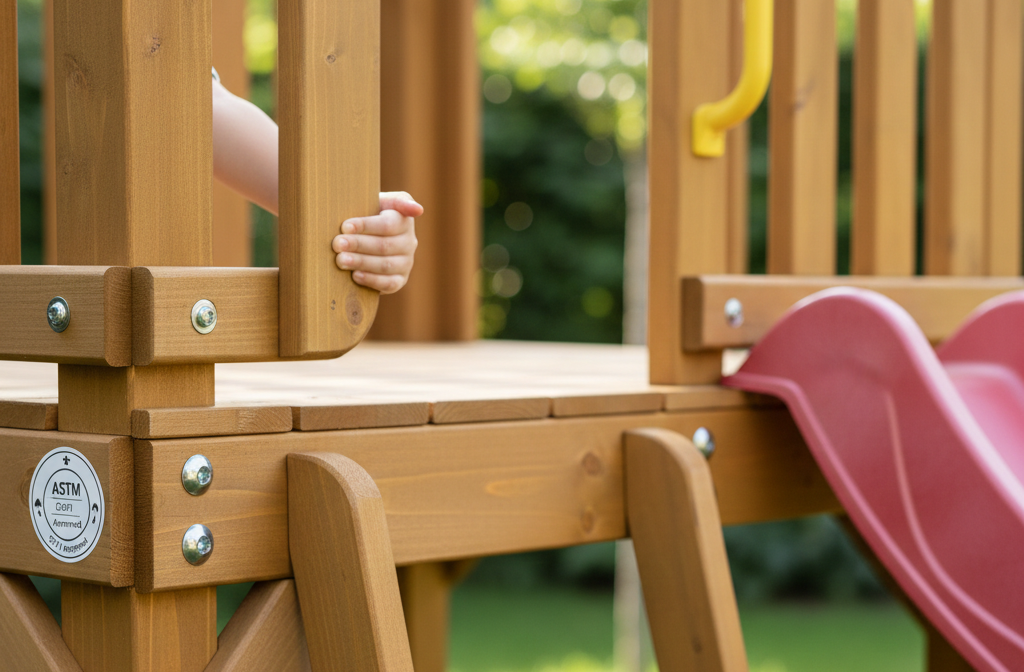
Outdoor playhouse price ranges: what to expect in 2026
Understanding the cost of outdoor playhouses helps you set realistic expectations and find the best value for your budget. Prices vary significantly based on material quality, size, integrated features, and brand reputation. Here’s what you can expect across different price brackets. All prices shown in British pounds (£), euros (€), and US dollars ($) for international reference.
Budget-friendly options (£100-£300 / €120-€360 / $130-$390)
Basic plastic playhouses offer an affordable entry point for families exploring outdoor play structures. These typically feature simple designs, bright primary colours, and minimal accessories like small windows or flower boxes. While they won’t last as long as wooden alternatives, they’re perfect for toddlers or families testing whether their children will engage with outdoor play before making a larger investment. At this price point, expect assembly within an hour and a lifespan of around five years with basic care.
Mid-range playhouses (£300-£800 / €360-€960 / $390-$1,040)
This category includes quality wooden Wendy houses, larger plastic structures with integrated slides, and basic play towers. You’ll find better construction quality, weather-resistant treatments, and more customisation options. These playhouses typically last 5-10 years with proper maintenance, making them an excellent value for growing families. Many mid-range wooden playhouses arrive unfinished, allowing you to personalise them with paint and accessories. Assembly usually requires 4-6 hours and basic DIY skills.
Premium playhouses (£800-£2,000 / €960-€2,400 / $1,040-$2,600)
High-end wooden playhouses made from FSC-certified timber, elaborate play towers with multiple levels, and beautifully themed designs fall into this bracket. These structures often include integrated slides, climbing walls, sandpits, covered porches, and premium weather-resistant finishes. With proper annual maintenance, they can serve multiple children over a decade and even be passed down to younger siblings or resold with good retained value. Professional assembly is often recommended or included in the price.
Luxury custom playhouses (£2,000+ / €2,400+ / $2,600+)
Bespoke designs, multi-room structures, and architecturally impressive playhouses represent the top tier of outdoor play investments. These often mirror real cottage or castle designs, may feature electrical lighting, include elaborate theming, and use premium sustainable materials. While expensive, they can genuinely add value to your property and become cherished garden features that last 15+ years. Some families view these as garden rooms that can be repurposed as storage or hobby spaces once children outgrow them.
Additional costs to factor into your budget
Beyond the playhouse purchase price, consider these essential extras that typically add 20-30% to your total investment:
- Delivery charges: £50-£150 / €60-€180 / $65-$195 depending on size and location
- Professional assembly: £100-£300 / €120-€360 / $130-$390 for complex structures
- Base materials (gravel, paving slabs, timber): £50-£200 / €60-€240 / $65-$260
- Safety surfacing (rubber mulch, wood chips): £100-£400 / €120-€480 / $130-$520
- Initial weatherproofing treatment: £30-£80 / €35-€95 / $40-$105
- Annual maintenance supplies: £30-£80 / €35-€95 / $40-$105 per year
- Optional accessories (swings, steering wheels, chalkboards): £20-£200 / €25-€240 / $25-$260
What kind of features to look for in a playhouse?
Beyond the basic structure, numerous features can enhance a playhouse’s appeal and play value, turning it into a dynamic centre for childhood adventure.
Activity play
Integrated activities are a major draw. A Slide provides immediate excitement and a fun way to exit the playhouse. Slides come in various lengths and styles, from straight runs to more curved designs. Swings can often be attached to playhouse structures or play towers, offering classic outdoor fun. Climbing elements, such as rope ladders, rock walls, or monkey bars, add an adventurous dimension and further boost physical development. Some playhouses also include sandpits or tunnels for varied engagement.
Creativity corner
Encourage artistic and imaginative exploration with features designed for creative pursuits. A playhouse can be outfitted with a miniature play kitchen, complete with sinks and pretend hobs, fostering role-play as chefs. Chalkboards mounted on the walls invite drawing and doodling, while small workbenches or craft areas can inspire little builders and artists. Accessories like mailboxes, steering wheels, bells or even a play telephone can further fuel imaginative scenarios.
Social Spaces
Comfortable and social features make a playhouse more inviting for extended play sessions and for hosting friends. Built-in benches inside or on a porch provide a place to rest, read, or chat. Small picnic tables, either integrated or placed nearby, are perfect for pretend meals or snack times. These elements transform the playhouse into a cozy retreat or a gathering spot for imaginative social play.
Expanded Adventures
For those seeking more elaborate play experiences, consider playhouses with expanded designs. This can include multiple rooms or sections, a balcony or upper deck for a lookout point, or even interconnected tunnels that lead to other play areas. These features offer more complex play environments, encouraging children to create fantasy stories and scenarios.
Styling and Decor
The visual appeal of a playhouse can be enhanced with thoughtful styling and decor. Many wooden playhouses come unfinished, allowing you to paint them in vibrant colours that appeal to your child or complement your gardens aesthetic. Accessories like decorative shutters, flower boxes, a colourful flag, or a charming doorbell can add personality. The styling should reflect your child’s preferences and the overall vibe you wish to create.
Common Mistakes When Buying an Outdoor Playhouse
Learning from others’ experiences can save you time, money, and disappointment. Here are the most frequent errors families make when selecting outdoor playhouses.
Underestimating space requirements: Many families purchase playhouses without accounting for safety clearance zones. A playhouse with a slide needs 2-3 metres of clear space at the exit, while swings require even more. Measure twice, buy once—include all safety zones in your calculations before committing to a purchase.
Ignoring your garden’s ground conditions: Installing a playhouse on sloped, waterlogged, or rocky ground creates ongoing problems. Poor drainage leads to rot in wooden structures, while uneven surfaces make playhouses unstable and unsafe. Assess your garden’s terrain honestly and budget for proper ground preparation.
Choosing style over safety: Themed playhouses look appealing in product photos, but safety must come first. Avoid structures with sharp edges, inadequate railings on elevated platforms, or toxic materials. Always verify that playhouses meet current safety standards and have appropriate certification.
Buying for current age only: Children grow quickly, and a playhouse designed solely for a three-year-old will seem boring by age six. Choose structures with adaptable features or the option to add accessories like climbing walls or swings as your children mature.
Overlooking maintenance requirements: Wooden playhouses require annual sealing, regular cleaning, and periodic repairs. If you’re not prepared for this commitment, a low-maintenance plastic option might suit your lifestyle better. Neglected wooden structures deteriorate rapidly, wasting your investment.
Failing to check assembly requirements: Some playhouses arrive in hundreds of pieces requiring 8-12 hours of assembly with multiple people. Others come partially pre-assembled. Clarify what’s involved and whether professional installation is available before purchasing. Factor assembly difficulty into your decision, especially if you lack DIY experience.
Not researching the manufacturer: Not all playhouse brands offer equal quality. Research manufacturer reputations, read customer reviews, and verify warranty terms. Reputable companies stand behind their products with comprehensive warranties and responsive customer service.
Safety is a must
When investing in an outdoor playhouse, prioritizing high-quality construction and stringent safety standards is non-negotiable. This ensures not only the longevity of the playhouse but, more importantly, the well-being of your children.
The Importance of High-Quality, Sustainable Materials
The choice of materials directly influences a playhouse’s durability, safety, and environmental impact. Wooden Playhouses, particularly those made from ethically sourced, sustainably grown timber like FSC-certified wood, offer a natural, sturdy, and aesthetically pleasing option. Cedar and pine are common choices, known for their durability and resistance to rot and insects when properly treated. High-quality materials are essential for enjoyable outdoor play in various weather conditions.
Real families share their outdoor playhouse experiences
Understanding how outdoor playhouses actually perform in real gardens, with real children, provides an invaluable perspective beyond manufacturer descriptions and specifications. Here’s what families commonly discover after living with their playhouses.
The transformation in outdoor play habits
Parents consistently report that adding an outdoor playhouse dramatically increases the time their children voluntarily spend outside. What was once a struggle to get children into the garden becomes a daily routine they initiate themselves. The playhouse becomes a destination rather than simply an empty outdoor space, giving purpose and structure to outdoor time. Many families notice their children combining playhouse time with exploration of the wider garden, using the structure as a home base for adventures.
Social benefits exceed expectations
While parents often purchase playhouses thinking primarily about physical activity, the social advantages frequently prove even more significant. Children naturally invite friends to see and play in their playhouse, creating organic opportunities for social interaction and cooperative play. Parents describe hosting more playdates, seeing improved sharing and negotiation skills, and watching lasting friendships form around playhouse games. The structure becomes a neutral social space where children feel ownership and confidence.
Seasonal use varies by playhouse type
Families with wooden playhouses report year-round use in British climates, with children enjoying the shelter during light rain and the cosy enclosed feeling during cooler months. Plastic playhouses tend to see reduced winter use, as they offer less weather protection and can feel cold to the touch. Play towers with exposed elements get the most use during spring and summer when climbing and sliding in dry conditions are safest and most comfortable. Consider your local climate and how often your garden is usable when selecting a playhouse type.
Maintenance reality check
The maintenance commitment for wooden playhouses proves more significant than many families initially anticipate. Annual sealing or painting becomes a genuine family project requiring several hours, though many parents report their children enjoy helping with this task. Checking screws, replacing worn ropes on climbing elements, and keeping moving parts lubricated requires regular attention. Families who succeed long-term often schedule maintenance twice yearly—spring preparation and autumn weatherproofing—making it a predictable routine rather than a forgotten chore.
Unexpected creative uses emerge
Children use their playhouses in wonderfully creative ways that parents never predicted. The structure becomes a reading den, an art studio during dry weather, a natural science observation post for bird watching, a theatre for performances, and countless imaginary settings from shops to spaceships. Some families add solar fairy lights, outdoor cushions, or small bookcases, transforming the playhouse into a genuine retreat. The most successful playhouses are those with enough flexibility to adapt to whatever creative vision children bring.
Space planning lessons learned
Families frequently wish they’d positioned their playhouse with better sight lines from the house, allowing easy supervision while children play. Others regret not considering how the playhouse would affect garden aesthetics year-round or how shade patterns change seasonally. The most satisfied families planned not just for the playhouse itself but for the activity zone around it, creating defined pathways, positioning the slide exit away from flower beds, and ensuring the structure complements rather than dominates the garden.
Where can I find the right outdoor playhouse?
Finding the perfect outdoor playhouse for your family shouldn’t mean spending hours visiting multiple websites, comparing conflicting information, and wondering which manufacturers you can trust. Backyard Village exists to solve exactly this problem. We’ve created a comprehensive platform that brings together the best outdoor playhouse manufacturers and brands in one trusted location, making your search straightforward and stress-free. Our mission is simple: help families make confident, informed decisions about outdoor play equipment.
What makes Backyard Village different: We understand that choosing an outdoor playhouse involves balancing multiple factors—your budget, available garden space, your child’s age and interests, material preferences, and long-term durability. That’s why we’ve built smart filtering tools that let you narrow down options according to your specific requirements.
Beyond helping you find the right playhouse, Backyard Village provides ongoing support throughout your ownership journey. Our comprehensive guides cover everything from garden preparation and installation tips to seasonal maintenance schedules and creative customisation ideas. We’re building a community where families can share experiences, learn from each other, and make outdoor play a central part of childhood.
Ready to find your perfect outdoor playhouse? Visit Backyard Village today and discover why hundreds of families trust us to guide their outdoor play investments. Your children’s magical garden adventure starts here.
How to prepare your garden for a playhouse?
Proper garden preparation ensures your outdoor playhouse remains safe, level, and durable for years to come. Follow these essential steps to create the perfect foundation for your child’s new play space.
Time needed: 2 days
Step-by-step instructions to get your backyard ready for a playhouse
- Measure and mark the installation area
Start by measuring the exact dimensions of your chosen playhouse, including any extensions like slides or swings. Add at least 2 meters of clearance space around all sides for safe play and easy access. Use stakes and string to mark the perimeter, helping you visualize the footprint and ensure it fits comfortably within your garden layout.
- Check for underground utilities and obstacles
Before digging or leveling, contact your local utility companies to identify any underground pipes, cables, or wiring in the installation area. Look overhead for low-hanging branches or power lines that could pose hazards. Remove any rocks, roots, or debris from the marked area that might interfere with installation or create uneven surfaces.
- Level the ground surface
A level foundation is crucial for stability and safety. Use a long spirit level or laser level to check the ground’s evenness. For minor slopes, you can level the area by removing soil from high spots and filling low areas with compacted soil or sand. Significant slopes may require building a raised platform or terracing to create a flat surface.
- Create proper drainage
Ensure water won’t pool around or under the playhouse by creating slight drainage slopes away from the structure. Consider installing a layer of gravel or crushed stone beneath the playhouse to improve drainage and prevent moisture buildup. This step is particularly important for wooden playhouses, as standing water can lead to rot and decay over time.
- Install an appropriate base surface
Choose a base material that suits your playhouse type and local climate. Options include compacted gravel for excellent drainage, paving slabs for a solid foundation, treated timber bearers for wooden structures, or rubber safety surfacing for areas with climbing features. Ensure the base extends slightly beyond the playhouse footprint for complete support and easier maintenance access.
- Add safety surfacing around activity areas
For playhouses with slides, swings, or climbing elements, install impact-absorbing safety surfacing in fall zones. Popular options include rubber mulch, wood chips, sand, or rubber safety tiles. The surfacing should extend at least 2 metres from the end of slides and beneath swing arcs, with a minimum depth of 20-30 centimetres depending on the height of play features.
- Plan for accessibility and pathways
Create clear pathways leading to the playhouse entrance using stepping stones, gravel paths, or bark chips. This prevents muddy tracks and makes the play area accessible in all weather conditions. Consider adding a small paved or decked area near the entrance for easy transitions and a spot for outdoor shoes or toys.
- Consider sun exposure and shade
Evaluate how much direct sunlight the area receives throughout the day. While some sun exposure is healthy, excessive heat is not. Also, it can make plastic components uncomfortable and cause wooden structures to dry out and crack. If the area lacks natural shade, plan to add a shade sail, plant fast-growing trees nearby, or position the playhouse to receive morning sun and afternoon shade.
- Prepare for assembly day
Clear the entire garden area of toys, furniture, and other obstacles to give installation teams or yourself plenty of working space. Ensure gate access is wide enough for the delivery of large panels or pre-assembled sections. Have all necessary tools ready, including drills, levels, hammers, and anchoring materials. Check weather forecasts and schedule installation for a dry day to prevent delays and ensure proper assembly conditions.
- Plan for future maintenance access
Leave adequate space around the playhouse for routine inspections, cleaning, and maintenance tasks. Ensure you can easily access all sides to reapply sealants, check for damage, or make repairs. Consider how you’ll store maintenance supplies like wood treatments, touch-up paint, and cleaning materials nearby for convenient seasonal upkeep.
Conclusion
Choosing an outdoor playhouse is a rewarding investment that offers profound benefits for children’s development and family enjoyment. By carefully considering safety features, exploring the diverse types of playhouses available—from classic Wendy houses to adventurous Play Towers—and prioritising high-quality, sustainable materials, you can select a structure that fosters imaginative play, encourages physical activity, and creates a lifetime of cherished memories.
Remember to factor in your child’s age and interests, the available space in your gardens, and your budget to make an informed decision. An outdoor playhouse is an investment in joy, creativity, and your child’s connection with the natural world, making it one of the most valuable additions to any backyard.
Ready to find your perfect outdoor playhouse? Visit Backyard Village to explore our carefully curated selection from trusted manufacturers who meet the highest safety and quality standards.
FAQs
Yes, wooden playhouses offer excellent customisation options. You can paint them in your child’s favourite colours, add decorative shutters, install flower boxes, or attach accessories like slides and swings. For structural modifications such as adding windows, doors, or extensions, contact the manufacturer first to ensure safety standards are maintained and warranty conditions aren’t voided.
Wendy’s house is simply a traditional name for a wooden playhouse, originating from the character Wendy in Peter Pan. The term is commonly used in the UK and refers to small wooden structures designed for children’s play. Today, “Wendy house” and “playhouse” are often used interchangeably, though Wendy houses typically suggest a classic cottage-style wooden design.
Yes, you can paint a wooden playhouse using child-safe, outdoor wood paint or stain. Choose non-toxic, water-based paints suitable for outdoor use that can withstand weather conditions. Ensure the wood is clean and dry before painting, and apply a primer first for best results. Plastic playhouses can also be painted using specialist plastic paint, though the finish may not last as long as on wood.
Always check with your local planning authority if unsure, and inform neighbours as a courtesy before installation. For example, in the UK, most garden playhouses don’t require planning permission as they’re considered “permitted development.” However, there are restrictions: the playhouse must be single-storey, no higher than 2.5 metres if within 2 metres of a boundary, and must not cover more than 50% of your garden. Rules differ if you live in a listed building, conservation area, or flat.
A high-quality wooden playhouse can last 10-15 years or more with proper maintenance, including regular sealing and weatherproofing. Plastic playhouses typically last 5-10 years before UV damage and wear become noticeable. The lifespan depends on material quality, weather exposure, maintenance routine, and how actively the playhouse is used. Investing in FSC-certified wood and weather-resistant materials significantly extends durability.
Outdoor playhouses are suitable for children aged 18 months to 12 years, depending on the design and features. Toddlers (18 months – 3 years) benefit from simple, enclosed playhouses with wide doors and no elevated platforms. Children aged 4-8 years enjoy playhouses with slides, climbing features, and imaginative play spaces. Older children (9-12 years) may prefer elaborate play towers with multiple levels and challenging physical elements.
The minimum space required depends on your playhouse size and features. A basic playhouse needs its footprint plus 2 metres of clearance on all sides for safe access. Playhouses with slides require an additional 2-3 metres of safety space at the slide exit. If including swings, allow the full arc of the swing plus 2 metres. For a standard 1.5m x 2m playhouse with a slide, plan for approximately 6m x 6m of total garden space.
Wooden playhouses can be relocated but require careful disassembly and reassembly, which may void warranties or compromise structural integrity. Plastic playhouses are lighter and easier to move, though UV damage may make older structures brittle. If you anticipate moving house or rearranging your garden, consider a modular design or lighter materials. Most playhouses are designed as semi-permanent structures, so factor in their location carefully during initial installation.